
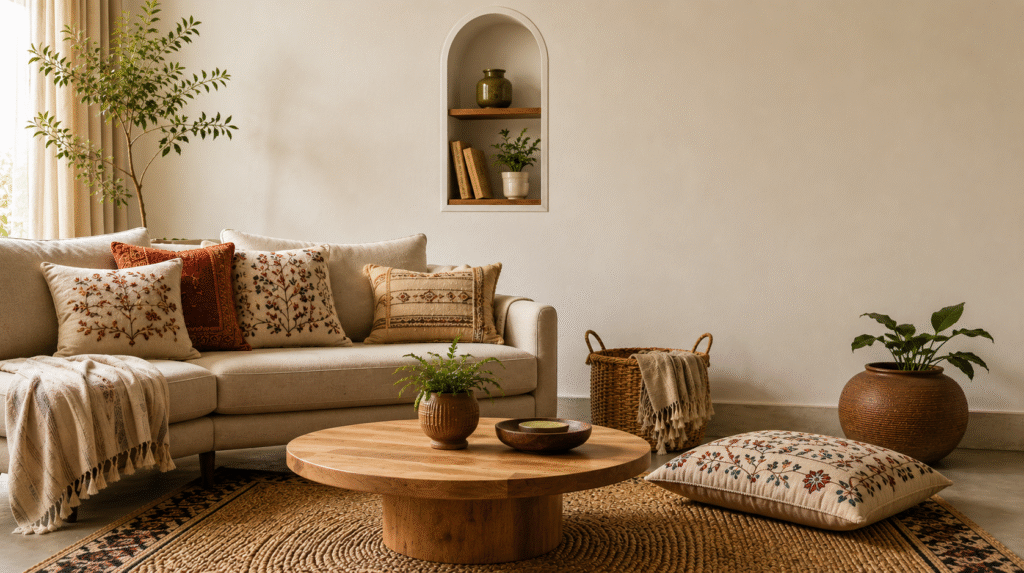
How to Style Handcrafted Rugs & Textiles for a Warm, Beautiful Home
A thoughtfully decorated home is not only about choosing beautiful furniture.
The details—the texture of a rug, the softness of a cushion, the weave of a
throw, or the warmth of handcrafted accents—are what make a space feel complete.
Handcrafted rugs and textiles bring something especially meaningful to interiors.
They introduce natural textures, traditional craftsmanship, subtle variations,
and a sense of warmth that mass-produced décor often struggles to replicate.
But bringing different handcrafted pieces together requires a little balance.
Too many patterns can make a room feel busy, while too many plain surfaces can
make it feel flat.
So, how do you create a home where rugs, cushions, throws, and handcrafted décor
work beautifully together?
Let’s explore some simple styling ideas.
1. Start with the Rug as Your Foundation
A rug is often one of the largest textile pieces in a room, which makes it a
natural starting point for your décor.
Instead of choosing cushions or throws first, begin by considering the rug’s
colour, pattern, texture, and size.
For example:
- A neutral jute rug works beautifully with earthy cushions and wooden furniture.
- A detailed hand-knotted rug can become the statement piece in a sophisticated living room.
- A soft cotton rug can create a relaxed atmosphere in bedrooms or casual spaces.
- A subtle patterned rug can add character without overpowering minimalist interiors.
The key is to let the rug establish the visual direction of the room.
2. Layer Cushions for Texture and Comfort
Once your rug is in place, cushions are an easy way to introduce additional
colour and texture.
Handcrafted and embroidered cushions can complement the rug without necessarily
matching it exactly.
Try combining:
- Solid-coloured cushions with embroidered designs
- Different fabric textures
- Small and large cushion sizes
- Neutral shades with one or two deeper accent colours
- Traditional patterns with contemporary furniture
For example, an earthy rug paired with cream, terracotta, mustard, or muted green
cushions can create a warm and inviting setting.
Remember: coordination is more important than perfect matching.
3. Use Throws to Add Softness
Throws are one of the simplest ways to make a living room or bedroom feel more relaxed.
Drape a handcrafted throw casually over the arm of a sofa, the back of an accent
chair, or the corner of a bed.
A throw can also help connect different elements in the room. If your rug has a
subtle accent colour, choose a throw that picks up the same tone without duplicating
the entire pattern.
This creates continuity while keeping the space visually interesting.
4. Mix Textures Instead of Matching Everything
One of the easiest ways to make a room feel sophisticated is to combine different textures.
Think of a room with:
- A woven rug underfoot
- A linen or cotton cushion
- An embroidered accent cushion
- A soft throw
- Wooden furniture
- Ceramic or handcrafted decorative pieces
Even when the colours are simple, the different textures create depth.
This is especially useful when decorating with neutral shades. Cream, beige,
ivory, brown, muted green, and earthy tones can feel rich and layered when
different materials are brought together.
5. Balance Traditional Craftsmanship with Modern Furniture
Handcrafted décor does not have to be limited to traditionally styled homes.
In fact, artisan pieces can look especially striking when paired with contemporary furniture.
A handwoven rug beneath a clean-lined sofa can soften a modern living room.
Similarly, embroidered cushions can add warmth to a minimal bedroom without
making the space feel overly traditional.
The contrast between old-world craftsmanship and modern silhouettes creates
an interior that feels personal rather than overly coordinated.
6. Create a Consistent Colour Story
You don’t need to use the same colour throughout your room.
Instead, choose a small palette of complementary shades.
A simple approach is the 60-30-10 rule:
- 60% — dominant neutral or base colour
- 30% — secondary colour
- 10% — accent colour
For instance, a living room could use warm beige as its base, muted brown as
the secondary tone, and terracotta as an accent.
Your rug could carry two of these colours, while cushions and throws subtly
repeat the others.
This creates a cohesive look without making every piece appear identical.
7. Let One Handcrafted Piece Take Centre Stage
Handcrafted décor has character, so you don’t necessarily need several statement
pieces in the same room.
If you have a beautifully detailed hand-knotted rug, let it become the focal point.
Keep surrounding pieces relatively understated and allow the craftsmanship of
the rug to stand out.
Alternatively, you can make an embroidered cushion, handcrafted throw, or artisan
wall accent the centre of attention.
The idea is simple: give your most special piece enough visual space to be appreciated.
8. Think About Proportion and Placement
Beautiful décor can still look out of place if the proportions aren’t right.
Before buying a rug or arranging textiles, consider the size of your furniture
and the dimensions of your room.
For living rooms:
- Make sure the rug relates properly to the seating arrangement.
- Avoid rugs that look too small for the furniture.
- Allow enough floor space around the rug where appropriate.
- Position cushions so they complement rather than overcrowd the sofa.
For bedrooms:
- Consider placing a larger rug beneath the bed.
- Use runners beside the bed for smaller spaces.
- Add a soft throw at the foot of the bed for an extra layer.
Good proportions help handcrafted pieces look intentional rather than simply
added to a room.
9. Bring Natural Materials Together
Natural materials have an effortless connection with handcrafted décor.
Jute, cotton, wool, wood, cane, clay, linen, and other natural materials can
work beautifully together because they share an organic visual quality.
A jute rug with wooden furniture and cotton cushions, for example, can create
a relaxed, earthy atmosphere.
You can also introduce natural materials through smaller accents such as baskets,
pottery, lamps, or woven décor.
The result is a home that feels warm, comfortable, and connected to nature.
10. Keep Everyday Living in Mind
A beautiful home should also be comfortable and practical.
When selecting handcrafted textiles, think about how the room is actually used.
For busy living areas, choose durable materials and designs that can handle regular
use. In bedrooms or quieter spaces, you can explore softer and more delicate textures.
Also consider:
- Cleaning requirements
- Foot traffic
- Children and pets
- Exposure to sunlight
- Placement of furniture
- Frequency of use
The best décor is the kind that looks beautiful while fitting naturally into your everyday life.
11. Care for Your Handcrafted Textiles
Handcrafted pieces deserve thoughtful care to preserve their texture, colour,
and craftsmanship.
Some simple habits can help:
- Vacuum rugs regularly using an appropriate setting.
- Address spills as soon as possible.
- Avoid excessive moisture unless the material is designed for washing.
- Rotate rugs periodically to encourage even wear.
- Keep delicate textiles away from prolonged direct sunlight.
- Follow the specific care instructions provided for each material.
With the right care, quality handcrafted textiles can remain part of your home for years.
12. Create a Home That Feels Personal
The most beautiful interiors don’t necessarily follow one design trend.
They reflect the people who live in them.
A handcrafted rug collected during a special trip, embroidered cushions that
add a favourite colour, a traditional textile passed down through generations,
or an artisan-made throw can all become part of your home’s story.
This is where handcrafted décor truly stands apart.
Each piece carries the marks of its making—the weave, the embroidery, the texture,
and the subtle variations that make it different from a factory-produced object.
Conclusion: Style with Intention
Styling handcrafted rugs and textiles is less about following strict decorating
rules and more about creating balance.
Start with a rug, build layers with cushions and throws, mix different textures,
introduce natural materials, and allow your favourite handcrafted pieces to take
centre stage.
Whether your home is modern, traditional, minimal, bohemian, or somewhere in between,
artisan-made textiles can bring warmth and personality to the space.
At URA Living, we believe beautiful homes are created through thoughtful choices—pieces
that combine craftsmanship, comfort, character, and timeless appeal.
Because when décor has a story behind it, your home becomes more than a beautiful space.
It becomes a reflection of the people and moments that make it yours.