
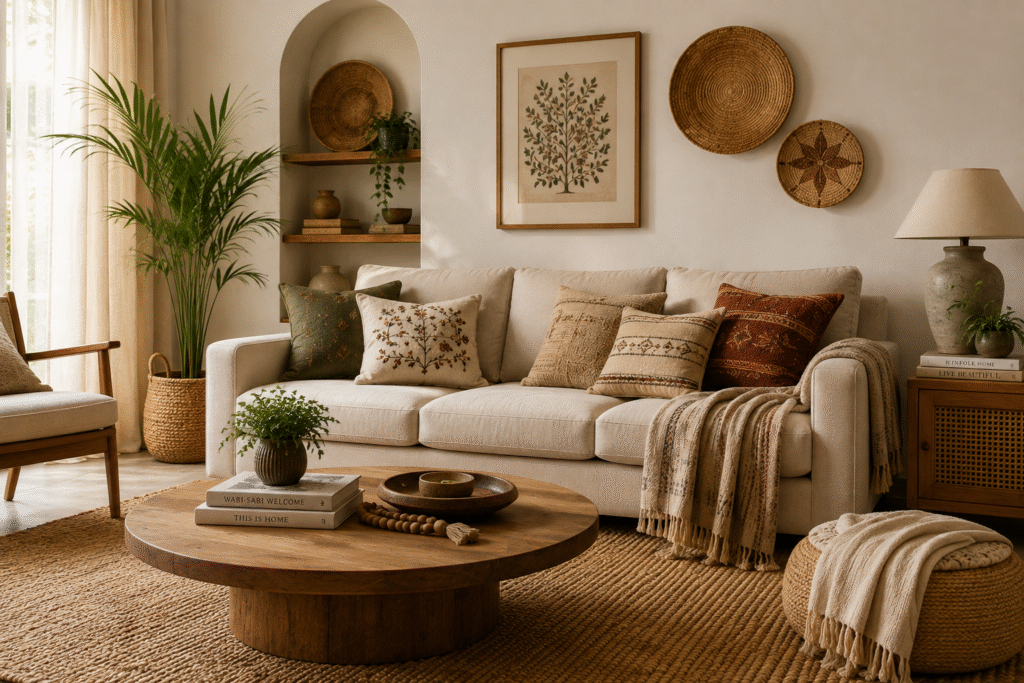
A beautiful home is not always defined by bold colours or elaborate décor. Sometimes, it is the subtle combination of textures, natural materials, soft fabrics, and thoughtful details that makes a space feel truly inviting.
Natural textures have a timeless quality. From woven rugs and cotton cushions to jute accents, wooden furniture, and handcrafted textiles, they can add warmth and depth without making a room feel overwhelming.
Whether your interior style is modern, traditional, minimal, or relaxed, incorporating natural textures can make your home feel more comfortable and personal.
So, how can you bring these textures into your home while keeping everything balanced?
Let’s explore some simple ideas.
1. Begin with a Neutral Foundation
Natural textures work especially well against a neutral colour palette.
Shades such as:
- Ivory
- Beige
- Cream
- Sand
- Warm white
- Soft brown
- Muted green
create a calm foundation that allows textures to become the main visual element.
Instead of relying on strong colours to make a room interesting, let woven surfaces, embroidery, natural fibres, and subtle patterns provide character.
A neutral room with different textures can feel much richer than a room where every element uses the same material.
2. Add a Textured Rug
A rug is one of the easiest ways to introduce natural texture into a room.
A woven jute rug can add an earthy quality to a contemporary living room, while a hand-knotted rug can bring depth and craftsmanship to a more traditional setting.
Consider the overall atmosphere you want to create.
For a relaxed look, natural fibres and subtle patterns work beautifully.
For a more sophisticated room, a detailed handcrafted rug can become the focal point.
The right rug can visually connect the furniture while also making the room feel softer and more comfortable.
3. Layer Different Fabrics
Once your rug is in place, introduce different fabrics through cushions, throws, curtains, and upholstery.
The key is not to make everything identical.
Instead, combine materials that complement one another.
For example, you could pair:
- A woven rug
- Cotton cushions
- Embroidered accent cushions
- A soft textured throw
- Linen curtains
The different surfaces create visual depth while maintaining a cohesive colour palette.
This approach can make even a simple room feel thoughtfully designed.
4. Bring Handcrafted Cushions into the Space
Cushions are small details, but they can have a significant impact on the overall character of a room.
Handcrafted and embroidered cushions can introduce pattern, colour, and texture without requiring major changes to your furniture.
Try placing a combination of cushions on a sofa rather than using identical pieces throughout.
You can mix:
- Plain and embroidered cushions
- Different shapes and sizes
- Subtle patterns with one statement design
- Soft neutrals with earthy accent colours
The result should feel collected and comfortable rather than perfectly matched.
5. Use Wood to Add Natural Warmth
Textiles are only one part of creating a naturally textured interior.
Wood can add another important layer.
A wooden coffee table, side table, shelving unit, or accent chair can immediately introduce warmth into a space.
Pairing wood with woven textiles creates a natural relationship between hard and soft materials.
For example, a wooden coffee table placed over a textured rug and surrounded by upholstered furniture can create a balanced and inviting living area.
6. Introduce Woven Accents
Small woven details can make a surprisingly big difference.
Consider adding baskets, trays, lampshades, storage pieces, or decorative objects made from natural fibres.
These elements can provide texture without taking up too much visual space.
A woven basket beside a sofa can also be practical for storing throws, while a textured lampshade can create a softer atmosphere when the lights are switched on.
Good décor should look beautiful while also having a purpose.
7. Don’t Be Afraid of Imperfection
One of the most appealing qualities of handcrafted and natural materials is that they do not always look perfectly uniform.
Small variations in:
- Weave
- Colour
- Texture
- Embroidery
- Shape
- Finish
can be part of their charm.
These subtle differences give handcrafted pieces a sense of individuality.
Instead of trying to make every element look identical, allow these natural variations to contribute to the personality of your space.
8. Create Layers from the Floor Up
A well-designed room often feels inviting because of the layers within it.
Start from the floor with a rug.
Then build upwards with furniture, cushions, throws, curtains, wall décor, and lighting.
For example:
Floor: textured rug
Furniture: natural wood and soft upholstery
Sofa: embroidered cushions and a woven throw
Walls: handcrafted artwork
Lighting: warm, textured lampshade
Accessories: baskets, ceramics, and plants
Each layer contributes something different while working together as a whole.
9. Add Greenery for a Natural Connection
Plants can complement natural textiles beautifully.
The organic shapes of leaves contrast with the structured forms of furniture and rugs, while the greenery adds freshness to neutral interiors.
You don’t necessarily need a large collection of plants.
One tall plant beside a sofa, a smaller plant on a side table, or a few leaves in a handcrafted vase can be enough.
Natural greenery can make a room feel more alive without adding visual clutter.
10. Keep Patterns Balanced
Patterns are a wonderful way to add personality, especially when using handcrafted textiles.
However, too many competing patterns can make a room feel visually crowded.
If your rug has a detailed pattern, consider using simpler cushions around it.
If your rug is relatively plain, you can introduce more decorative cushions or throws.
Think of patterns as accents rather than making every surface a statement.
This allows individual handcrafted pieces to be appreciated.
11. Make Comfort Part of the Design
A beautiful home should also feel good to live in.
When selecting textiles, think about how they feel as well as how they look.
Soft cushions, comfortable rugs, breathable fabrics, and lightweight throws can make everyday spaces more enjoyable.
A living room should invite you to sit down.
A bedroom should feel restful.
A reading corner should feel cosy.
Natural textiles can help create these sensations while maintaining a refined appearance.
12. Let Your Home Evolve Naturally
You don’t need to decorate your entire home at once.
Some of the most personal interiors develop gradually.
You might begin with a rug, then add cushions that complement it, followed by a throw, a wooden accent, or a handcrafted decorative piece.
Over time, these elements can create a space that reflects your preferences and experiences.
This approach also allows you to choose pieces thoughtfully rather than buying everything simply to fill a room.
Conclusion: Make Texture Part of Your Home’s Story
Creating a warm and inviting home is about more than following a particular interior design trend.
It is about choosing materials, colours, and objects that make the space feel comfortable and personal.
Natural rugs, handcrafted cushions, woven throws, wooden furniture, plants, and artisan-made accents can all work together to create a home with depth and character.
The beauty is in the balance.
Mix textures without overcrowding the room. Combine handcrafted details with contemporary pieces. Choose a calm colour palette and let natural materials provide the visual interest.
At URA Living, we believe that the most memorable homes are built around pieces that feel authentic, comfortable, and thoughtfully chosen.
Because when natural textures and craftsmanship come together, even the simplest room can feel beautifully lived in.