
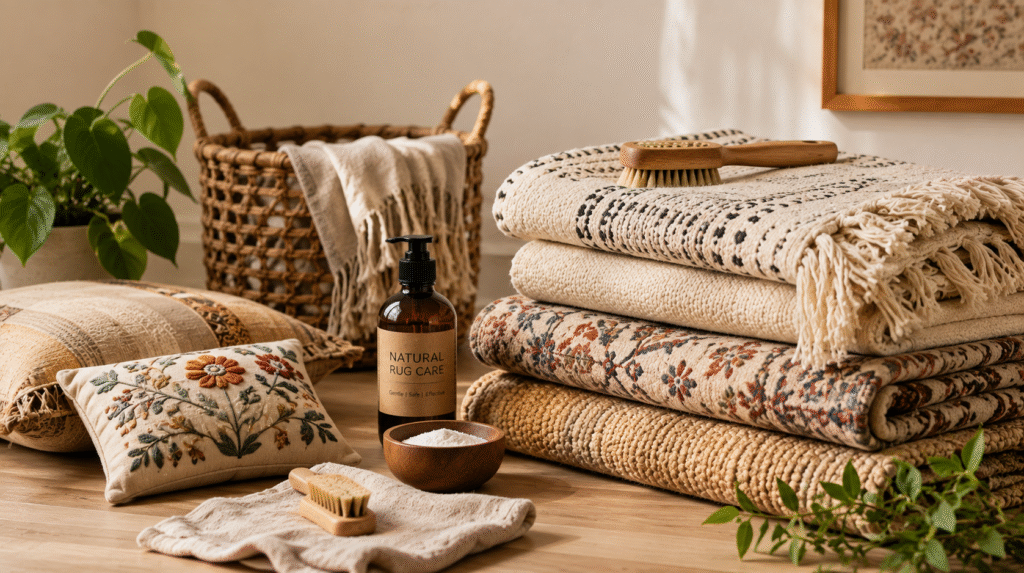
Handcrafted rugs, embroidered cushions, woven throws, and other textile pieces bring warmth and personality into a home. Unlike mass-produced décor, handcrafted pieces often carry the character of the artisan who created them, making them something to enjoy for years rather than simply replace with the next trend.
But beautiful textiles need thoughtful care.
The good news is that maintaining handcrafted home décor doesn’t have to be complicated. With a few simple habits and the right cleaning approach, you can preserve the colour, texture, softness, and craftsmanship of your favourite pieces.
Here is a practical guide to keeping your handcrafted rugs and home textiles looking beautiful for longer.
1. Start by Understanding the Material
Before cleaning any handcrafted textile, identify what it is made from.
Different materials respond differently to moisture, friction, heat, and cleaning products.
For example:
- Jute has a naturally textured appearance and should be protected from excessive moisture.
- Cotton is generally versatile and easy to maintain, depending on its construction.
- Wool is durable but benefits from gentle cleaning methods.
- Silk is delicate and usually requires more careful handling.
- Embroidered fabrics may need special attention around the decorative stitching.
Always check the care instructions supplied with the product before using a new cleaning method.
2. Vacuum Your Rugs Regularly
Regular vacuuming is one of the simplest ways to keep a rug looking fresh.
Dust, hair, crumbs, and everyday dirt can gradually settle between the fibres. If left for too long, this buildup can affect both the appearance and texture of the rug.
For regular maintenance:
- Vacuum gently and consistently.
- Use an appropriate setting for delicate rugs.
- Avoid aggressive brushing on fragile surfaces.
- Pay attention to areas around sofas, tables, and frequently used walkways.
- Vacuum both sides when the construction and care instructions allow it.
Regular light cleaning is usually better than waiting until a rug becomes heavily soiled.
3. Deal with Spills Quickly
Accidents happen, especially in living rooms and dining areas.
The most important thing is to avoid letting a spill sit for too long.
If something spills on your rug or textile:
- Act as quickly as possible.
- Gently blot the affected area.
- Avoid rubbing aggressively.
- Use only a suitable cleaning solution.
- Allow the area to dry properly.
Rubbing can push the liquid deeper into the fibres and may damage delicate textures or embroidery.
For valuable or particularly delicate handcrafted pieces, professional cleaning is often the safer choice.
4. Keep Excess Moisture Away
Moisture can be especially problematic for natural-fibre rugs.
Jute and other plant-based fibres can absorb water, which may affect their texture or cause unwanted changes if they remain damp.
Whenever possible:
- Keep rugs away from areas with frequent water exposure.
- Avoid soaking handcrafted rugs.
- Clean spills rather than saturating the material.
- Ensure rugs dry completely after appropriate spot cleaning.
- Avoid storing textiles while they are even slightly damp.
A dry, well-ventilated environment can help maintain the condition of natural textiles.
5. Rotate Your Rugs from Time to Time
Furniture placement and foot traffic can cause certain areas of a rug to experience more wear than others.
Rotating your rug periodically helps distribute everyday use more evenly.
This can be particularly useful when:
- A sofa sits permanently over one section.
- A coffee table occupies the centre.
- One side of the rug receives more sunlight.
- A particular walkway experiences heavy foot traffic.
Even distribution of use can help maintain the rug’s appearance over time.
6. Protect Handcrafted Rugs from Prolonged Sunlight
Natural sunlight can beautifully brighten a room, but prolonged direct exposure may gradually affect textile colours.
If a rug, cushion, or throw receives strong sunlight for several hours every day, consider adjusting its placement or using curtains or blinds during the brightest part of the day.
This is especially worth considering for richly coloured or intricately dyed handcrafted textiles.
A little protection can help preserve their original character for longer.
7. Give Your Cushions Some Attention Too
Rugs aren’t the only textiles that deserve regular care.
Handcrafted cushions are often used every day, which means they are exposed to dust, body oils, friction, and occasional spills.
To keep cushions looking fresh:
- Fluff them regularly.
- Rotate or change their position occasionally.
- Remove surface dust gently.
- Follow the recommended washing instructions.
- Avoid harsh detergents unless the fabric specifically allows them.
- Keep embroidered areas away from excessive friction.
For cushions with detailed hand embroidery, gentle handling is particularly important.
8. Take Care of Embroidery and Decorative Details
The beauty of handcrafted cushions and textiles often lies in their details.
Embroidery, tassels, fringes, decorative threads, and hand-finished elements can require slightly more attention than plain fabrics.
Avoid pulling loose threads or aggressively brushing decorative areas.
When cleaning:
- Handle embroidered sections gently.
- Keep sharp objects away from loose threads.
- Avoid excessive rubbing.
- Store delicate pieces carefully when not in use.
Small precautions can help preserve the craftsmanship that makes these pieces special.
9. Use a Rug Pad Where Appropriate
A good rug pad can provide more than additional comfort.
It can help keep a rug stable, reduce movement, and create a layer between the rug and the floor.
This can be particularly helpful in living rooms, bedrooms, and other areas where people frequently walk across the rug.
Before purchasing one, make sure the pad is suitable for your rug type and flooring.
The right foundation can contribute to both comfort and long-term usability.
10. Keep Furniture Weight in Mind
Heavy furniture can leave impressions on rugs and textile surfaces over time.
If a large piece of furniture remains in exactly the same position for years, certain areas of the rug may experience more compression than others.
When practical, slightly adjust furniture placement occasionally.
For smaller pieces such as chairs and tables, moving them periodically can also help distribute pressure.
11. Store Textiles Properly When Not in Use
Seasonal throws, extra cushions, and delicate decorative textiles may spend several months in storage.
Before storing them:
- Make sure they are completely clean and dry.
- Fold them carefully rather than compressing them excessively.
- Store them in a dry, well-ventilated space.
- Avoid direct sunlight.
- Keep them away from damp walls or floors.
- Avoid storing delicate textiles under very heavy objects.
Proper storage helps prevent unnecessary creasing, moisture damage, and deterioration.
12. Don’t Treat Every Rug the Same Way
One of the most important things to remember is that handcrafted rugs are not all made alike.
A jute rug, cotton rug, wool rug, silk rug, and hand-knotted rug can all have different care requirements.
For this reason, avoid assuming that a cleaning method that worked for one rug will automatically be suitable for another.
Always consider:
Material + construction + colour + finish + manufacturer’s care instructions
before attempting deeper cleaning.
13. Know When to Call a Professional
Regular maintenance can take care of everyday dust and minor spills, but some situations are better handled by professionals.
Consider professional cleaning when:
- A delicate rug has a significant stain.
- A valuable handcrafted piece needs deep cleaning.
- The textile has developed an unusual odour.
- Colours appear to be bleeding.
- The material has suffered water damage.
- You are unsure which cleaning method is safe.
Professional care can be particularly worthwhile for delicate hand-knotted, silk, or heavily embroidered pieces.
14. Build a Simple Care Routine
You don’t need an elaborate cleaning schedule.
A simple routine can make a noticeable difference:
Weekly:
Remove surface dust and vacuum regularly used rugs.
Monthly:
Check cushions, throws, and rugs for stains, loose threads, or areas receiving excessive wear.
Every few months:
Rotate rugs where appropriate and review furniture placement.
Seasonally:
Clean and store textiles that are not being used, making sure everything is completely dry beforehand.
When necessary:
Arrange professional cleaning for delicate or valuable handcrafted pieces.
Consistency is more important than complicated maintenance.
Why Proper Care Makes Handcrafted Décor Worth It
One of the biggest advantages of investing in quality handcrafted décor is that it can become part of your home for a long time.
A well-maintained rug can continue to define a living space. An embroidered cushion can remain a favourite accent on your sofa. A handcrafted throw can move from one room to another as your home evolves.
These pieces don’t have to be temporary decorations.
With thoughtful care, they can become part of the everyday story of your home.
Conclusion: Let Your Favourite Pieces Last
Handcrafted home décor is made to be appreciated—not simply displayed.
From woven rugs and embroidered cushions to soft throws and artisan textiles, each piece deserves a little attention to preserve its beauty.
Regular cleaning, gentle handling, protection from excessive moisture and sunlight, and proper storage can go a long way toward maintaining the look and feel of your favourite textiles.
Most importantly, always understand the material and follow its specific care requirements.
Because when you invest in craftsmanship, you’re investing in something that can make your home feel warm, personal, and beautiful for years to come.
At URA Living, we believe that the beauty of handcrafted décor lies not only in how it looks when you bring it home, but in how beautifully it continues to live with you.